
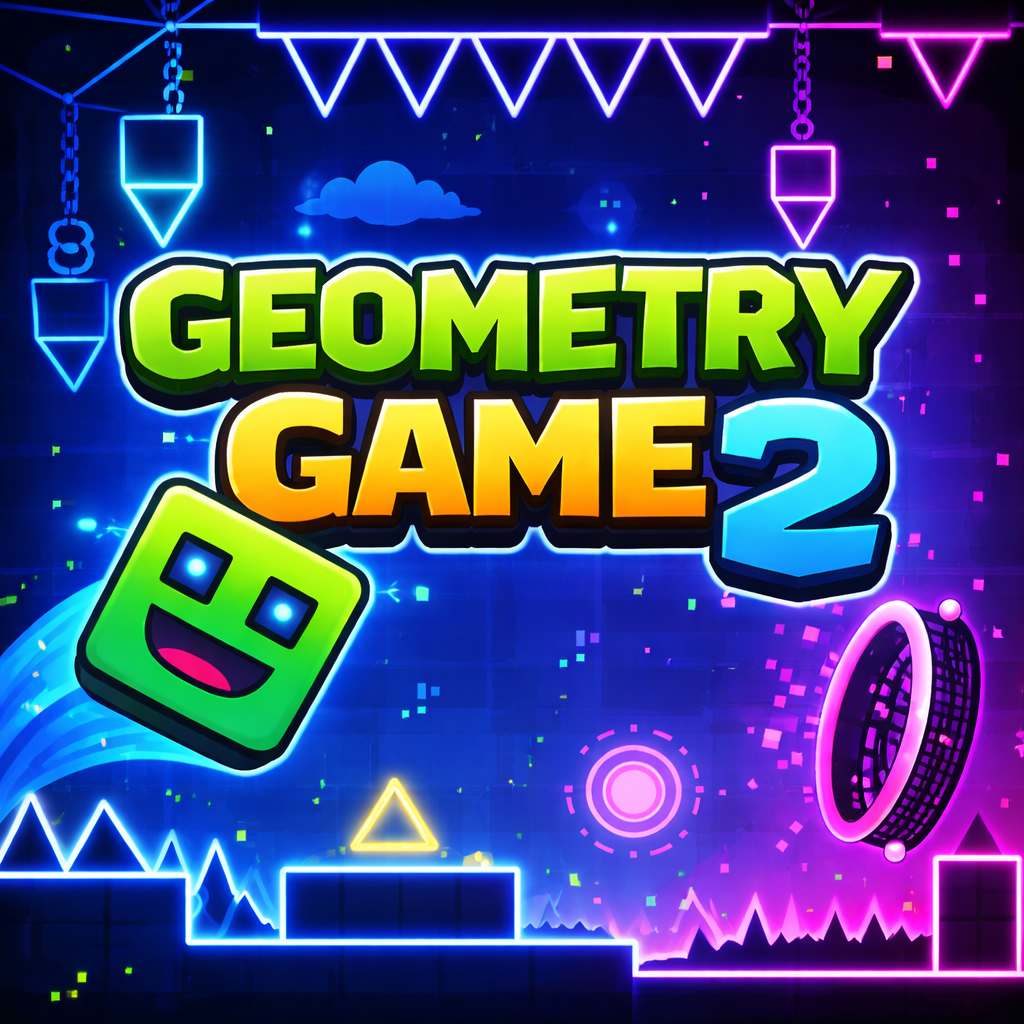
Geometry Dash is a game that looks chaotic on the surface but is actually built on precise rhythm and structure. When players first start, the experience feels overwhelming. The cube moves forward automatically, obstacles appear rapidly, and failure happens in seconds. It seems like the game is testing pure reflexes, but that’s only part of the story.
What truly defines Geometry Dash is its connection to music. Every level is synchronized with a soundtrack, and obstacles are placed in a way that matches the beat. At first, players may not notice this connection. They focus only on reacting to what they see, often failing because they are always slightly behind. The game feels unfair, not because it is random, but because the rhythm has not yet been understood.
As players continue, they begin to hear the level as much as they see it. The music becomes a guide. Jumps start to align with beats, and movements feel more natural. Instead of reacting late, players begin to act at the right moment, almost instinctively. This is when the gameplay shifts from chaotic to controlled.
Another important aspect is repetition. Geometry Dash expects players to fail many times, but each attempt builds familiarity. Players remember where obstacles are placed and how the rhythm flows. Over time, sections that once seemed impossible become manageable. The game doesn’t change, but the player’s understanding improves.
Confidence also plays a key role. Hesitation breaks rhythm, while commitment keeps the flow intact. Players who trust their timing perform better than those who second-guess themselves. This mental aspect adds depth to what might seem like a simple game.
In the end, geometry dash is not just about speed or reflexes—it is about synchronization. Players must align their actions with the rhythm of the level to succeed. Once that connection is found, the game transforms into a smooth and satisfying experience.
What begins as chaos becomes a form of control, guided by music and mastered through practice.
Instructor:
