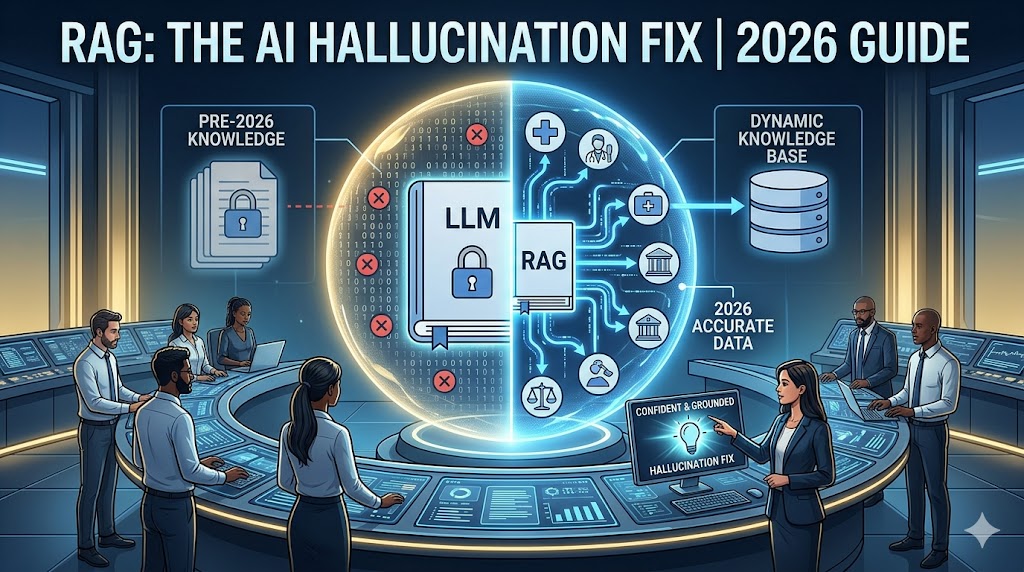
What Is RAG in AI? A Simple Guide to Retrieval-Augmented Generation

AI Gives Wrong Answers Sometimes: Here Is Why

Have you ever asked an AI chatbot a question and got a completely wrong answer?

It sounded confident. It was well written. But it was just plain wrong.

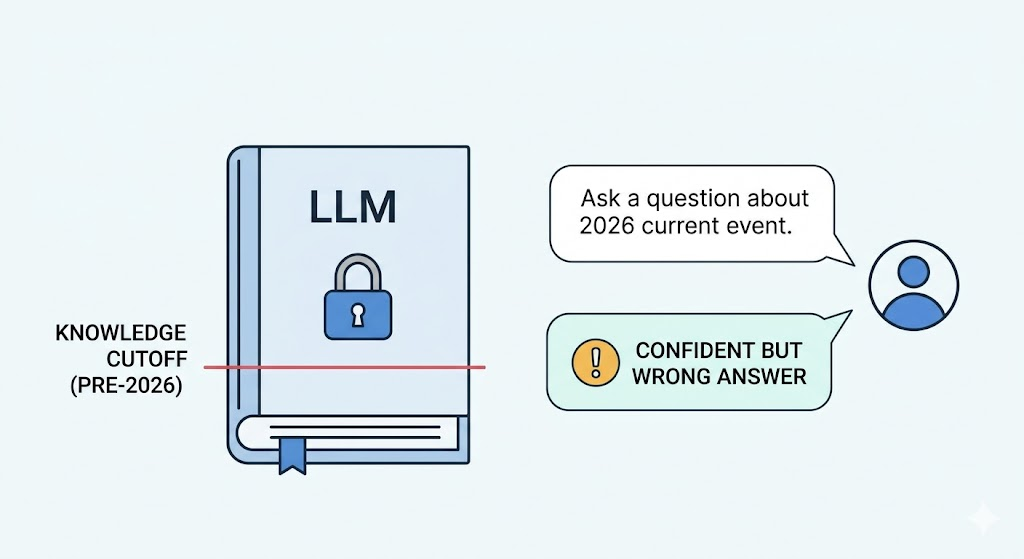
This problem has a name. It is called hallucination. And it happens because most AI models only know what they were trained on.

They have a knowledge cutoff date and cannot access new information or private company documents.

So when you ask something they do not know, they fill in the gap. Sometimes that means making something up.

RAG was built to fix this exact problem.

And in 2026, it has become one of the most important skills in the entire AI field.
Continue reading “What Is RAG in AI? A Simple Guide to Retrieval-Augmented Generation”

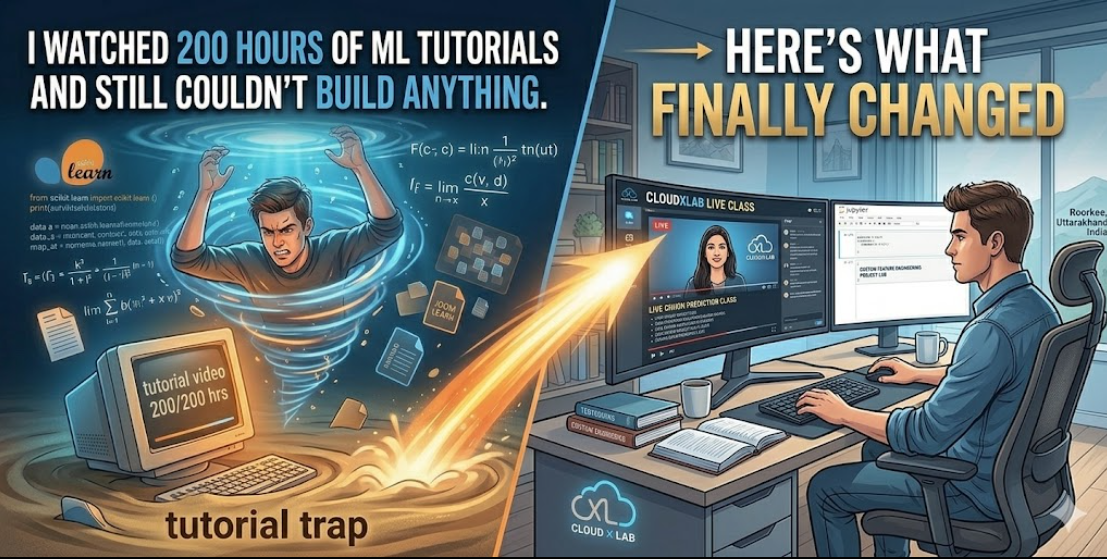
I Watched 200 Hours of ML Tutorials – Here’s What Finally Changed

The Night I Realized I Hadn’t Actually Learned Anything

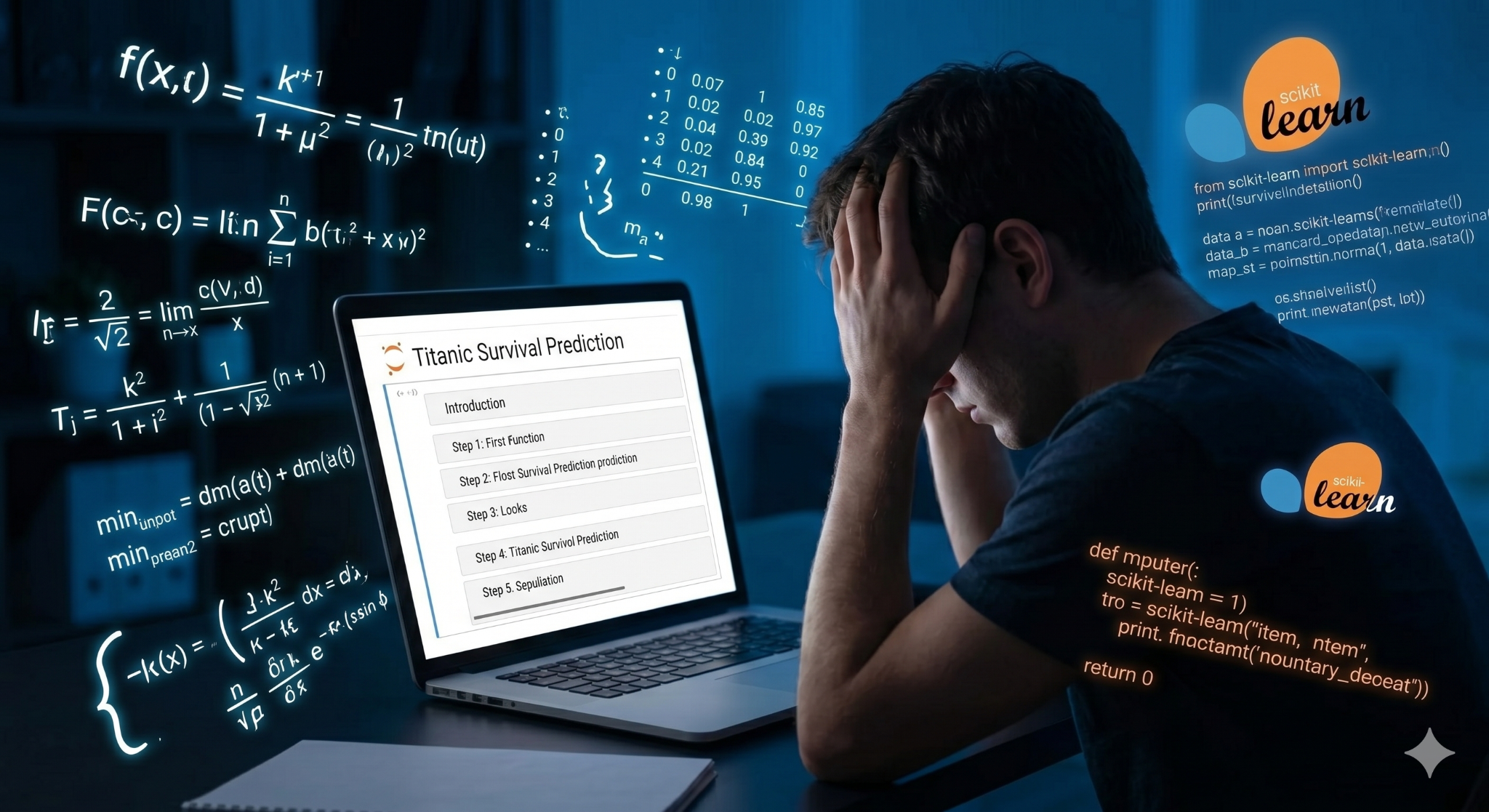
It was a Tuesday evening, about eight months into what I had been calling my “machine learning journey.”

A colleague who knew I had been studying ML seriously casually forwarded me a small dataset of customer transactions and said, “Hey, can you build a quick churn prediction model on this? Nothing fancy. Just want to see if there’s a pattern.” I opened my laptop with confidence. At this point, I had watched somewhere north of 200 hours of machine learning tutorials. I had completed three full courses on two different platforms. I had a notes folder with over 80 pages of summarized concepts. I understood gradient descent. I could explain what a confusion matrix was. I had watched someone build a churn model on YouTube just three weeks earlier.

I stared at the blank Jupyter notebook for forty-five minutes and produced nothing useful.

Not because the problem was hard. Not because I was missing tools. But because I genuinely did not know how to start when nobody was guiding me step by step. Every tutorial I had ever watched began with a cleaned dataset, a clear objective, and an instructor who already knew the answer. I had learned to follow. I had never learned to lead.

Continue reading “I Watched 200 Hours of ML Tutorials – Here’s What Finally Changed”

Hallucination and Alignment Limiting Transformer

Author: Atharv Katkar LinkedIn

Artificial intelligence has transformed how we access information and make decisions. Yet, a persistent challenge remains: hallucination—when AI confidently generates incorrect or fabricated information. Enter HALT (Hallucination and Alignment Limiting Transformer), a novel architecture designed to dramatically reduce hallucinations while preserving AI alignment and personality.

Prerequisites:

LLM : Large Language Model ( GPT-5, Claude, Mistral)

Train.json : A data file which is used to train LLM formatted in instruction & output format it’s second training after giving him 1st training of sentence arrangement and word understanding.

Hallucination : the generation of false, inaccurate, or nonsensical information that is presented as factual and coherent. A dream perhaps.

Continue reading “Hallucination and Alignment Limiting Transformer”

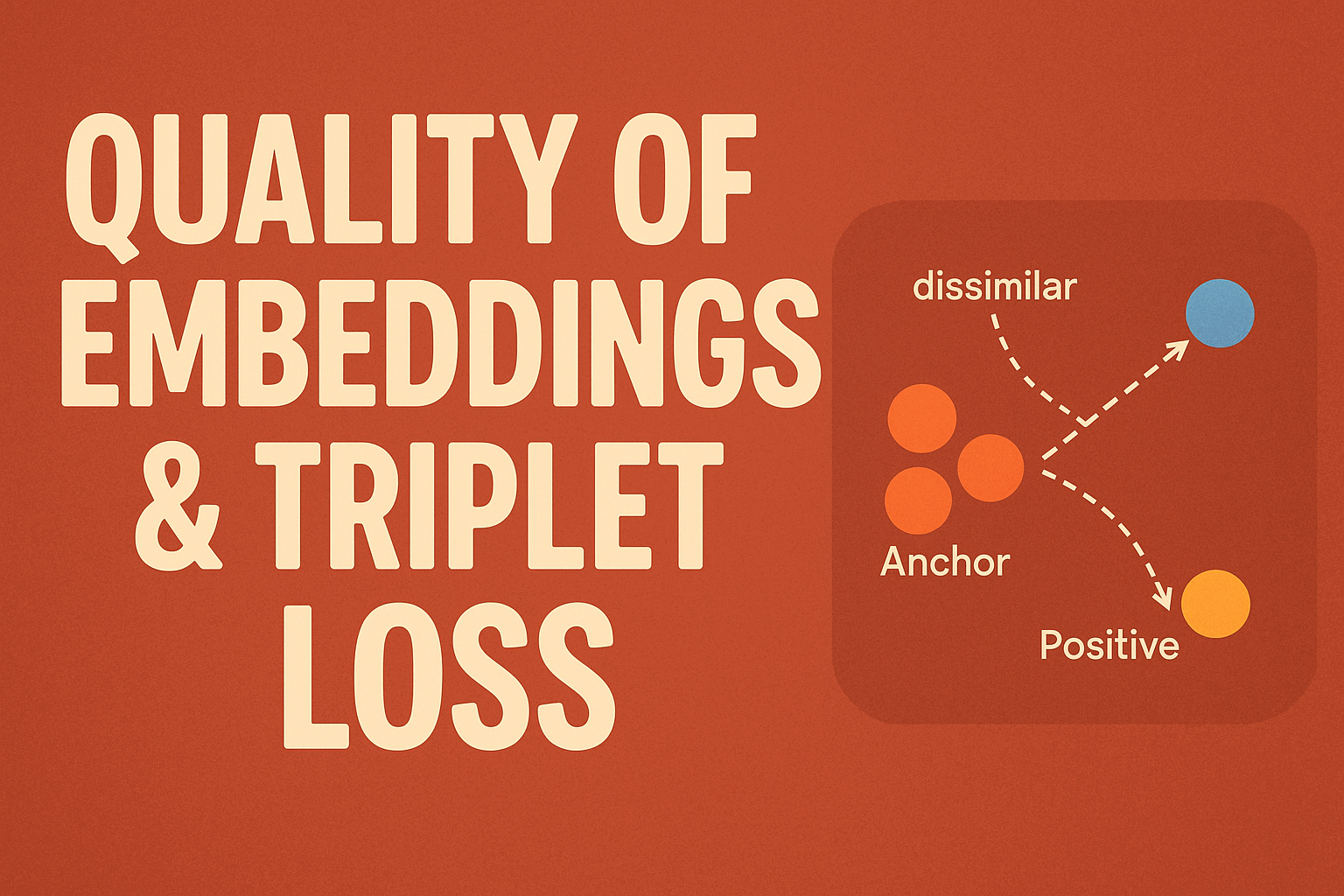
Quality of Embeddings & Triplet Loss

Author: Atharv Katkar Linkedin

Directed by: Sandeep Giri

OVERVIEW:

In Natural Language Processing (NLP), embeddings transform human language into numerical vectors. These are usually arrays of multiple dimensions & have schematic meaning based on their previous training text corpus The quality of these embeddings directly affects the performance of search engines, recommendation systems, chatbots, and more.

But here’s the problem:

Not all embeddings are created equal.

So how do we measure their quality?

To Identify the quality of embeddings i conducted one experiment:

I took 3 leading (Free) Text → Embedding pretrained models which worked differently & provided a set of triplets and found the triplets loss to compare the contextual  importance of each one.

Continue reading “Quality of Embeddings & Triplet Loss”

Discover Machine Learning Made Simple with “Ancient Science of Prediction”

Have you ever wondered how we predict things—like how much your grocery bill will be or how much website traffic to expect at a certain time? Prediction isn’t just a modern trick; it’s an ancient skill we’ve relied on for survival for centuries. And now, there’s a YouTube playlist that makes this fascinating science accessible to everyone: Ancient Science of Prediction

This machine learning series is designed for students, non-tech learners, and total beginners, breaking down complex ML concepts in a clear, approachable style. Whether you’re excited to explore new ideas or just starting out, this series will guide you through the foundations of prediction and machine learning in an engaging way!

Continue reading “Discover Machine Learning Made Simple with “Ancient Science of Prediction””

AI in Creative Fields: The Next Frontier for Art, Music, and Writing

Artificial Intelligence (AI) has revolutionized various industries, and the creative arts are no exception. From generating art pieces to composing music and crafting compelling narratives, AI is increasingly becoming a collaborator in creative processes. This blog explores how AI reshapes art, music, and writing, the tools driving these changes, and the implications for creators and consumers.

Overview of AI in Art Creation

AI systems generate visual art using deep learning models trained on large datasets of images. These systems learn patterns, styles, and textures from the training data and then use this knowledge to produce new, unique works of art.

Key Technologies in AI Art Generation

Here are the main technologies and methods behind art generation, with their technical explanations:

1. Generative Adversarial Networks (GANs):

GANs are one of the most popular AI models used in art generation. They consist of two neural networks:

    • Generator: Creates new images.
    • Discriminator: Evaluates whether an image is real (from training data) or fake (from the generator).
Continue reading “AI in Creative Fields: The Next Frontier for Art, Music, and Writing”

The Art and Science of Protein : Morphing Protein Assembly by Design

Introduction

Life’s fundamental processes rely on the ability of proteins to self-assemble into Complex structures, forming molecular machines that drive everything from photosynthesis to muscle contraction. Inspired by nature’s sophisticated protein assemblies, scientists have spent decades designing artificial protein structures with novel functions. The rational design of protein self assembly is an interdisciplinary effort, merging principles from biophysics, supramolecular chemistry, materials science, and computational modeling. This blog explores how researchers are mastering the complexities of protein self-assembly to create innovative materials and functional architectures.

Continue reading “The Art and Science of Protein : Morphing Protein Assembly by Design”

Neutralizing Deadly Snake Toxins: A Scientific Approach to Saving Lives

Snakebites pose a major public health challenge, especially in tropical and subtropical regions. Every year, millions suffer from venomous snakebites, leading to over 100,000 deaths and countless cases of amputations or permanent disabilities. Snake venom contains potent toxins that can cause paralysis, tissue destruction, and internal bleeding, making rapid and effective treatment essential.

Fortunately, recent advancements in science and medicine are paving the way for more effective treatments. In this blog, we’ll explore how snake venom affects the body, current treatment methods, and groundbreaking innovations that are set to revolutionize antivenom therapy

Continue reading “Neutralizing Deadly Snake Toxins: A Scientific Approach to Saving Lives”

“Stable Diffusion Explained: Modern Text-to-Image Technology”

Introduction

What if you could write, ‘A cozy cabin in the woods, surrounded by snow, under a beautiful aurora,’

Or ,”A man reading a blog online from CloudxLab Website.

Or ,”An ancient castle on a cliff, with waves crashing below and the moon glowing overhead “

and within seconds, seeing a perfect image of it come to life. That’s the magic of Stable Diffusion – a groundbreaking technology reshaping creativity as we know it .

Continue reading ““Stable Diffusion Explained: Modern Text-to-Image Technology””

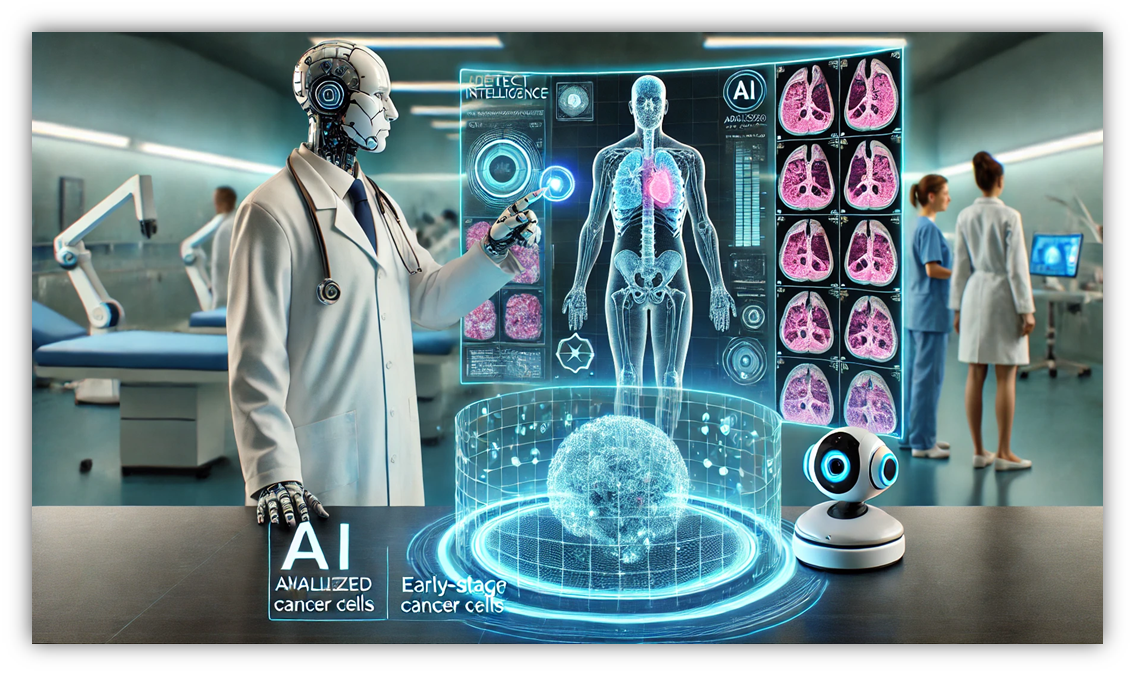
Using AI to Detect Cancer at an Early Stage: Transforming Diagnosis and Treatment

Cancer is one of the leading causes of death worldwide, with millions of new cases diagnosed every year. The key to improving survival rates is early detection, as cancers caught in their initial stages are significantly more treatable. Traditional diagnostic methods, such as biopsies, CT scans, MRIs, and mammograms, have limitations in accuracy, speed, and accessibility.

This is where Artificial Intelligence (AI), Machine Learning (ML), and Deep Learning (DL) are making a creative impact. AI-driven cancer detection systems are improving accuracy, reducing diagnostic time, and making cancer screening more accessible to populations worldwide. This blog explores how AI is transforming early cancer detection, its history, current advancements, and future potential.

A Brief History of Cancer Detection

Before modern medical imaging, cancer detection relied heavily on physical symptoms and biopsy procedures. By the late 19th and early 20th centuries, X-rays and microscopy became essential tools for identifying abnormal growths. However, misdiagnosis rates were high due to human limitations in analyzing medical images.

Continue reading “Using AI to Detect Cancer at an Early Stage: Transforming Diagnosis and Treatment”