How to Become a Data Scientist in 2026: A Complete Roadmap

Introduction

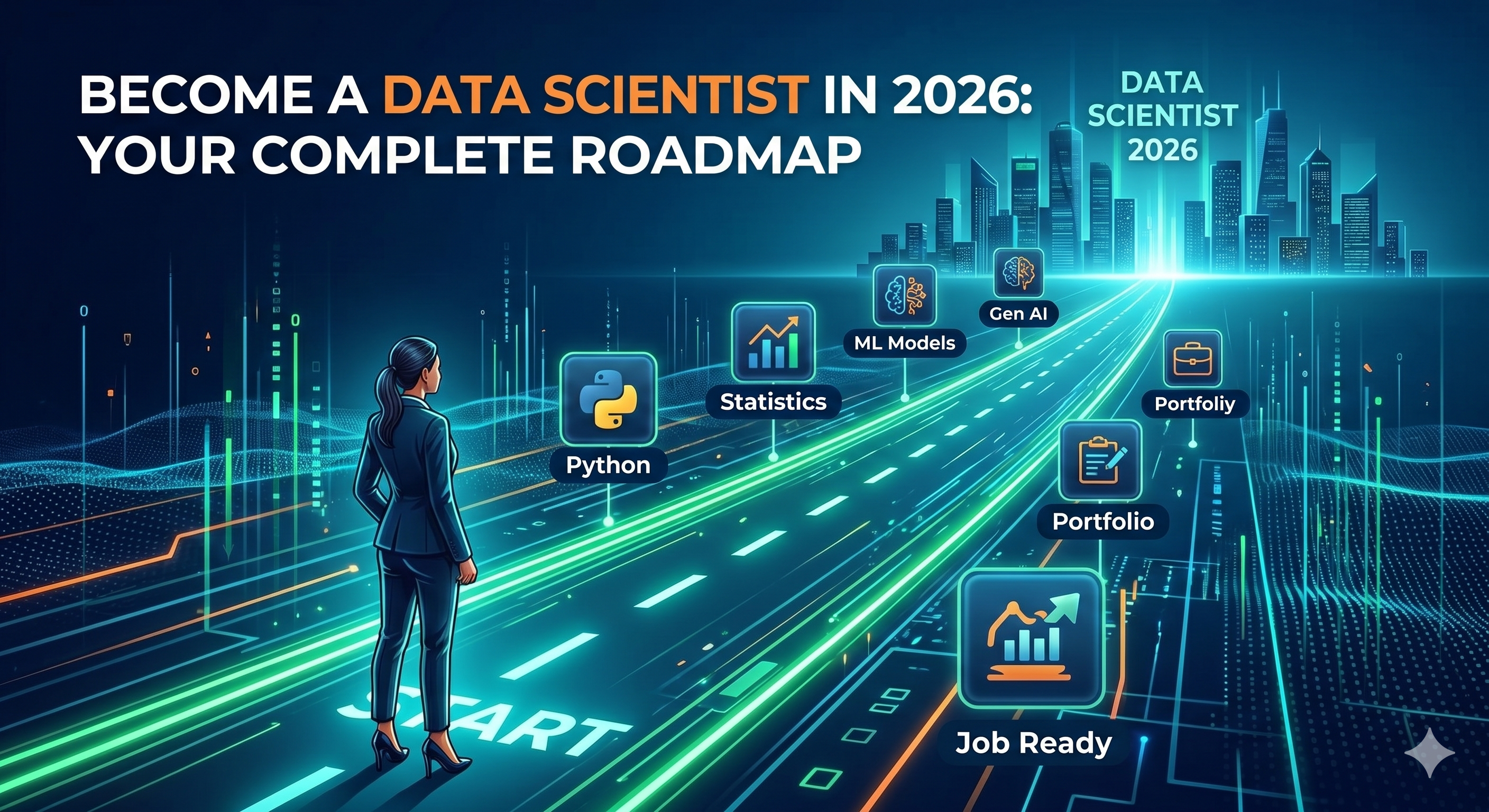
Let’s be honest: “data scientist” is one of those job titles that sounds glamorous but feels impossible to break into.

You see the success stories online. The job listings ask for a PhD, 5+ years of experience, and fluency in 12 programming languages. And you wonder: Is there even a path here for someone like me?

There is, and it’s more achievable than most people think.

In 2026, data science is no longer an exclusive club for research scientists from Ivy League schools. Companies across India and the world, from early-stage startups to Fortune 500 enterprises, are hiring data scientists at every level, and the skill gap between supply and demand remains stubbornly wide.

Continue reading “How to Become a Data Scientist in 2026: A Complete Roadmap”


Why Most AI Projects Fail in Production (And How to Make Them Work)

The Shocking Gap Between AI Demos and Real AI

Here is a number that might surprise you.

According to research by McKinsey, 78% of organisations now use AI in at least one business function. That sounds impressive. However, when you dig deeper, a very different story emerges.

Most AI projects, somewhere between 80 and 90 per cent, never make it past the prototype or proof-of-concept stage. They look great in a demo. They perform well in a controlled environment. But the moment they go live in the real world, something breaks. (Link)

This is called the AI production gap, and in 2026, it remains one of the biggest unsolved problems in the technology industry.

So why does this keep happening? More importantly, what separates the AI projects that actually work from the ones that quietly die after launch?

That is exactly what this blog answers.

Continue reading “Why Most AI Projects Fail in Production (And How to Make Them Work)”

Agentic AI Skills Gap: How to Become an AI Agent Builder in 2026

The Job That Barely Existed Two Years Ago

Two years ago, if you had written “Agentic AI Engineer” on your resume, most hiring managers would have looked at you blankly.

Today, that same title is appearing in job postings from Bangalore to Berlin. Companies are advertising for it urgently, offering salaries that reflect genuine scarcity, and in many cases, not finding the people they need.

This is not a gradual skills gap. It is a sharp, sudden chasm between what the industry needs and what the talent pool can currently supply. And it opened so fast that even many experienced ML engineers are not yet on the right side of it.

It is really important for people who want to work with AI to learn these skills and understand why there is such a high demand for them.

This post is that understanding, written in full.

Continue reading “Agentic AI Skills Gap: How to Become an AI Agent Builder in 2026”

What Is RAG in AI? A Simple Guide to Retrieval-Augmented Generation

AI Gives Wrong Answers Sometimes: Here Is Why

Have you ever asked an AI chatbot a question and got a completely wrong answer?

It sounded confident. It was well written. But it was just plain wrong.

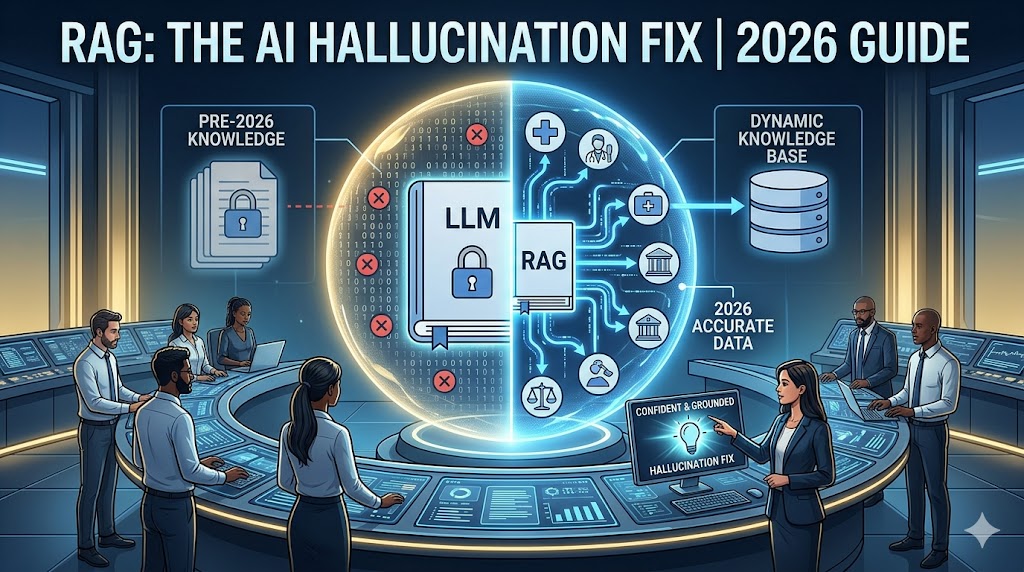
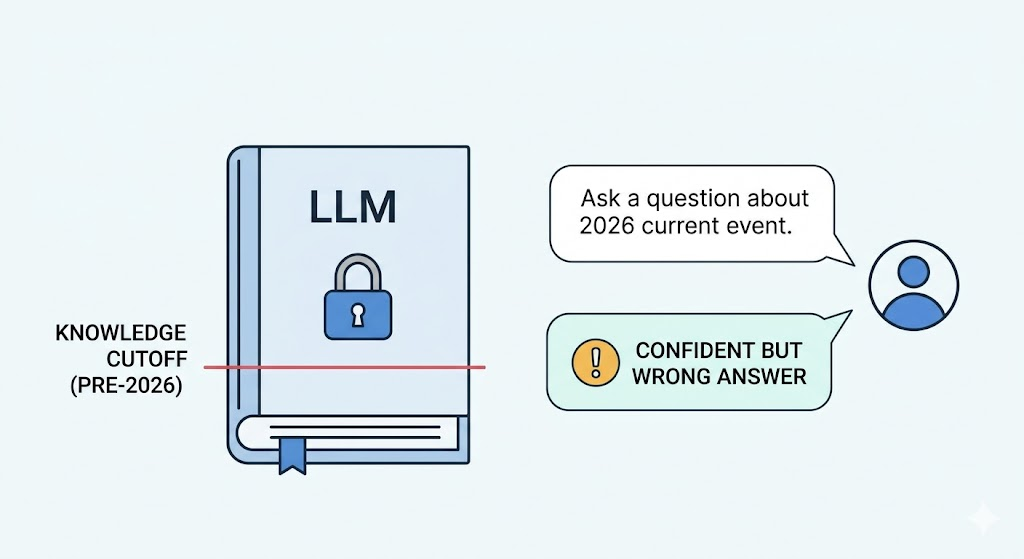
This problem has a name. It is called hallucination. And it happens because most AI models only know what they were trained on.

They have a knowledge cutoff date and cannot access new information or private company documents.

So when you ask something they do not know, they fill in the gap. Sometimes that means making something up.

RAG was built to fix this exact problem.

And in 2026, it has become one of the most important skills in the entire AI field.

Continue reading “What Is RAG in AI? A Simple Guide to Retrieval-Augmented Generation”

I Watched 200 Hours of ML Tutorials – Here’s What Finally Changed

The Night I Realized I Hadn’t Actually Learned Anything

It was a Tuesday evening, about eight months into what I had been calling my “machine learning journey.”

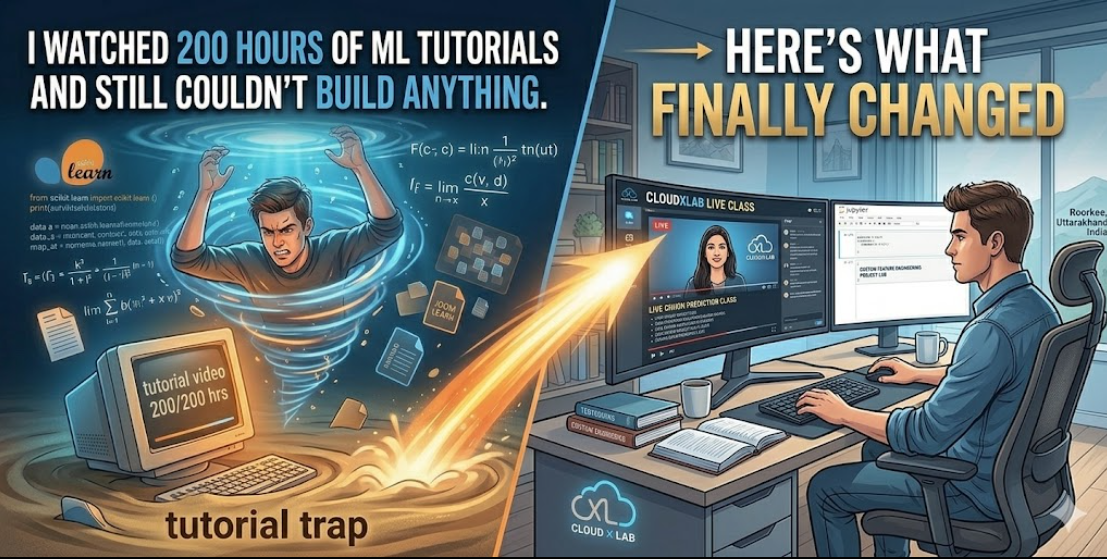
A colleague who knew I had been studying ML seriously casually forwarded me a small dataset of customer transactions and said, “Hey, can you build a quick churn prediction model on this? Nothing fancy. Just want to see if there’s a pattern.” I opened my laptop with confidence. At this point, I had watched somewhere north of 200 hours of machine learning tutorials. I had completed three full courses on two different platforms. I had a notes folder with over 80 pages of summarized concepts. I understood gradient descent. I could explain what a confusion matrix was. I had watched someone build a churn model on YouTube just three weeks earlier.

I stared at the blank Jupyter notebook for forty-five minutes and produced nothing useful.

Not because the problem was hard. Not because I was missing tools. But because I genuinely did not know how to start when nobody was guiding me step by step. Every tutorial I had ever watched began with a cleaned dataset, a clear objective, and an instructor who already knew the answer. I had learned to follow. I had never learned to lead.

Continue reading “I Watched 200 Hours of ML Tutorials – Here’s What Finally Changed”